

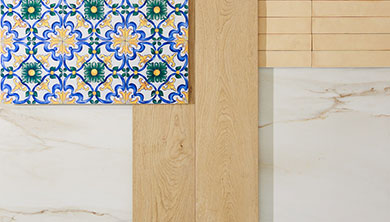

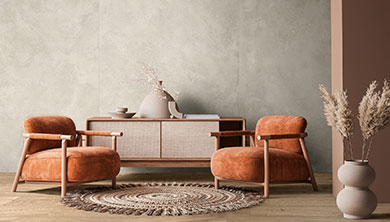

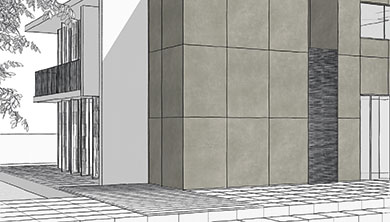
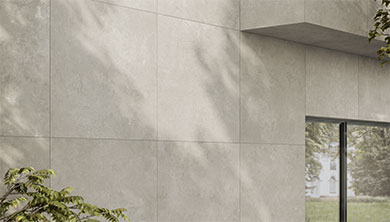
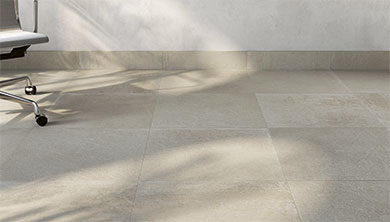
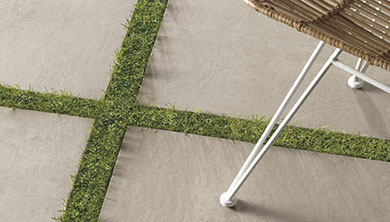

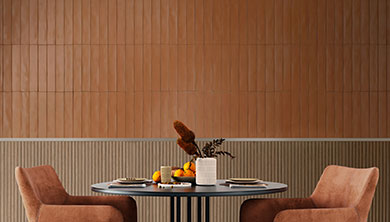


Realstone_Travertino
- 7 Colors
- 10 Sizes
- 2 Surfaces
Ragno's porcelain and ceramic tile collections provide solutions for stores, restaurants, offices, and contract spaces, combining durability for everyday use, easy maintenance, and freedom in choosing finishes, colors, and sizes.
Porcelain and Ceramic Floors and Wall Coverings for Stores, Venues, and Commercial Spaces


In a commercial space, floors and wall coverings must meet different requirements than those of a residential room. The constant flow of customers and staff, the movement of furniture, and frequent cleaning operations require materials that can maintain their properties over time.
Porcelain stoneware is particularly suitable for these contexts thanks to its dense structure, low water absorption, and wear resistance.
Practicality is especially evident in the daily management of the space. Porcelain surfaces do not require periodic protective treatments and can be cleaned with suitable detergents, making it easy to remove dust and dirt related to business activity.
High resistance to mechanical stress is also an important factor. In commercial spaces, where chairs, tables, displays, and other equipment are used or moved frequently, it’s necessary to choose flooring with the right technical features.
Alongside functionality, flooring plays a specific role in shaping the image of the space: it can discreetly complement the decor or become one of the elements that make the space recognizable, through colored surfaces, geometric patterns, and unique textures.
Read also: Porcelain Stoneware: Which to Choose? A Useful Guide to Making the Right Choice
A restaurant includes rooms that are experienced in very different ways: the dining room welcomes guests and communicates the character of the venue, the counter concentrates many customer interactions, while the kitchen is an operational space subject to intense activity.
Designing surfaces means recognizing these differences and choosing materials that meet each area’s conditions.
In the dining room, aesthetics often take center stage, relating to atmosphere, furniture, and lighting. Behind the counter and in prep areas, easy cleaning and resistance to frequent use become essential.
The counter is one of the first elements to catch the eye when entering a bar. Its surface helps define the style of the space, complements lighting, and can become a signature feature of the entire decor.
The front of the counter is perfect for using small-format tiles, allowing for decorative compositions with colors, reflections, and installation patterns. Rectangular shapes, for example, can be installed vertically to emphasize the height of the counter or horizontally to follow its length.
Glossy finishes enhance the light, while three-dimensional structures add depth to the surface. The effect also changes depending on the arrangement of lighting, which can highlight the relief of the tiles.
The Look collection offers glossy porcelain stoneware surfaces in 6x24 and 10x10 cm sizes, with a palette that includes neutral tones and bolder colors, such as Green, Avio, Blue, and Amaranth.
Another take on small formats comes from the Gleeze collection, featuring extra-glossy surfaces and color variations. The 7.5x20 cm format, along with 5x15 and 10x10 cm modules, allows for either a more traditional style or contemporary compositions.
Read also: Stoneware Coverings for Counters: How to Customize Kitchens, Bars, and Contract Spaces
The choice of tiles should start with operator safety and hygiene requirements, even before considering aesthetics.
Porcelain stoneware offers useful features for spaces like kitchens, thanks to its low water absorption and material strength.
Surfaces with StepWise technology are a good solution when you need a balance between slip resistance and easy maintenance. This technology delivers slip-resistant surfaces while maintaining a pleasant feel and a texture that isn’t overly rough, making normal cleaning easier.
Ragno’s stone and concrete-look collections, such as Realstone_Rapolano and Realstone_Tirrenica, offer different material interpretations to consider when designing workspaces. Wood-look surfaces, like those in the Ligno collection, can also help create visual continuity between areas of the space, always selecting products suitable for the intended use.
In a dining space, floor coverings should balance a distinctive look with resistance to continuous foot traffic and frequent movement of furniture.
For an elegant restaurant, hotel dining room, or hospitality area, marble-look porcelain stoneware introduces veining and color contrasts that enhance the space.
The Incanto collection interprets different marbles through porcelain stoneware surfaces available in sizes up to 120x278 cm. Natural and Glossy finishes offer different aesthetic options, while coordinated mosaics and decorative elements allow you to extend the look of the material to specific zones.
Large slabs are especially interesting if you want to reduce the number of joints and give the surfaces seamless continuity. For the dining room floor, however, the finish should be checked to ensure it suits the expected traffic and slip safety.
Concrete-look porcelain stoneware meets these needs with understated colors and textures that add character to the space without overpowering the rest of the design.
Among Ragno’s options, the Solida collection brings a contemporary touch to spaces, highlighting the realism of concrete-effect surfaces thanks to 3D Ink technology.
A mosaic insert, a change in format, or a shift in installation direction can also help distinguish the entrance, bar area, or certain spots in the dining room, as long as the technical features of the products match the intended use.
This way, the floor becomes part of the organization of the space, becoming part of the customer experience, not just a backdrop for furnishings.
In a store, the customer’s path moves through display windows, racks, and areas dedicated to product presentation. The flooring should guide this path, withstand heavy traffic, and help highlight what’s on display.
Stone-look surfaces are especially versatile in retail projects because they offer a natural look that works in many contexts, from boutiques and furniture stores to large-scale showrooms.
Tile size also affects the result. Large formats make it possible to create floors with fewer joints, giving surfaces more continuity and enhancing the stone graphics.
Fewer joints can also simplify maintenance, since there’s less grout to clean overall.
Among Ragno’s collections, Realstone_Rapolano reinterprets Tuscan travertine with a porcelain stoneware surface enhanced by 3D Ink technology, which brings out veins and micro-textures.
For stores and showrooms with a more minimal look, Realstone_Tirrenica features a stone look inspired by the landscapes of the Tyrrhenian Sea, with White, Beige, Gray, and Taupe tones.
The design can also continue on vertical surfaces, echoing the floor’s look on the walls of display windows, fitting rooms, or showcase areas.
The Rapolano Wall collection, for example, offers white-body, stone-look wall coverings in the 40x120 cm format, which coordinate with Realstone_Rapolano.
Coordinating floors and walls doesn’t necessarily mean using the same tile, but rather building a relationship between colors, textures, and proportions, while maintaining the technical features needed for each surface.
Wood-look porcelain stoneware brings the warmth of hardwood floors, while maintaining the durability and easy maintenance of ceramic.
Planks reproduce natural grain and shading, giving the floor a welcoming feel that suits open spaces, meeting rooms, and professional offices.
Compared to natural wood, porcelain stoneware doesn’t require sanding or periodic refinishing. Its dense surface also makes cleaning easier, which is important in spaces where office chairs, movable furniture, and equipment are used.
The Ligno collection interprets wood with a look inspired by Nordic landscapes, featuring light grain and a natural palette.
In meeting rooms, longer planks can follow the length of the central table, while in open spaces, a regular layout creates a consistent visual rhythm even on large surfaces.
The same wood effect can be used in reception areas, such as office and hotel reception desks or waiting rooms in professional or medical offices, creating a visual connection with the workspaces.
Pairing with neutral walls, minimal furniture, and metal or glass details lets you interpret the material in a contemporary way, without sacrificing the warm, natural look of the grain.
Read also: Wood-Effect Porcelain Stoneware or Hardwood Floors? Tips for Choosing
Yes, in certain situations it is possible to install new porcelain stoneware flooring over an existing floor, avoiding the need to remove the old tiles completely.
Thin ceramic surfaces can be especially useful for these projects, as they help minimize the increase in floor height.
However, feasibility depends on the condition of the existing floor, which must be stable, intact, and suitable for the new installation. You also need to consider the additional thickness at doors, thresholds, entrances, and other architectural elements.
Before proceeding, it’s essential to consult with a designer or qualified installer, who can verify the condition of the existing flooring and determine the most appropriate installation system.
Continuity between indoor and outdoor spaces can be achieved by choosing collections available in different finishes, designed for their specific uses.
In a bar or restaurant with an outdoor area, for example, you can extend the same stone or concrete effect used in the dining room to the outside, by selecting a version with technical features suitable for exposure to rain.
Some Ragno collections include Grip surfaces, designed to offer increased slip resistance in the relevant applications.
The finish and installation system should be chosen together with a designer, taking into account the climate, foot traffic, and surface safety requirements.
Discover Ragno Outdoor Tiles.
Regular maintenance of a porcelain stoneware floor involves removing surface dirt and washing with detergents.
Usually, daily cleaning just requires water and a neutral detergent, following the manufacturer’s instructions and avoiding harsh chemicals or products that might leave residue.
In stores, bars, and restaurants with constant foot traffic, it’s useful to schedule regular cleaning for the most heavily used areas, with special attention to entrances and service zones.
Large formats, with their reduced joint area, can make maintenance easier, while more textured surfaces require cleaning tools and methods suited to their finish.
Read also: Porcelain Stoneware: How to Clean It Best


