


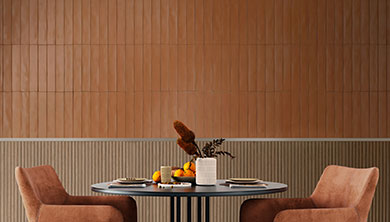


Travertino Wall
- 4 Colors
- 1 Sizes
- 1 Surfaces
The kitchen is one of the most lived-in rooms in the house, where floors and walls need to combine practicality and style. From stone-look surfaces to colorful backsplash coverings, porcelain stoneware and ceramic tiles offer solutions for every style. Explore the Ragno collections and find the perfect combination of materials, sizes, and finishes.
Ceramic and porcelain stoneware tiles for the kitchen, for floors and wall coverings in every style
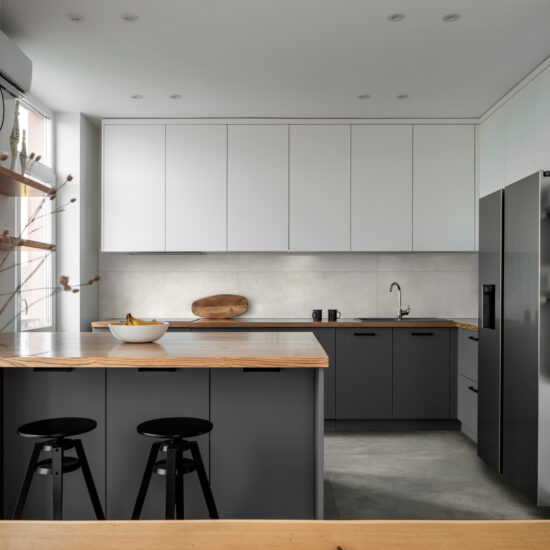
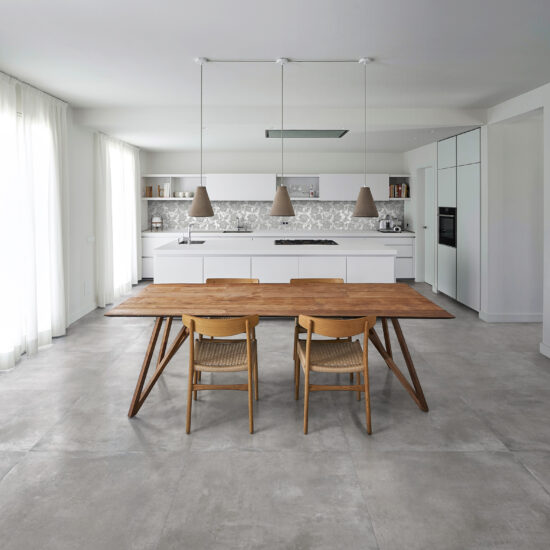
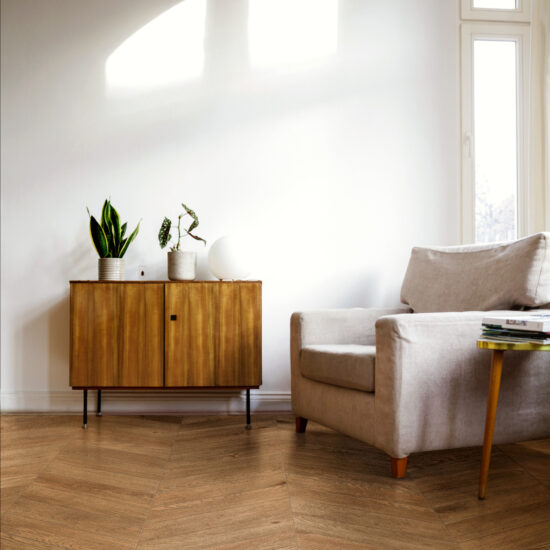
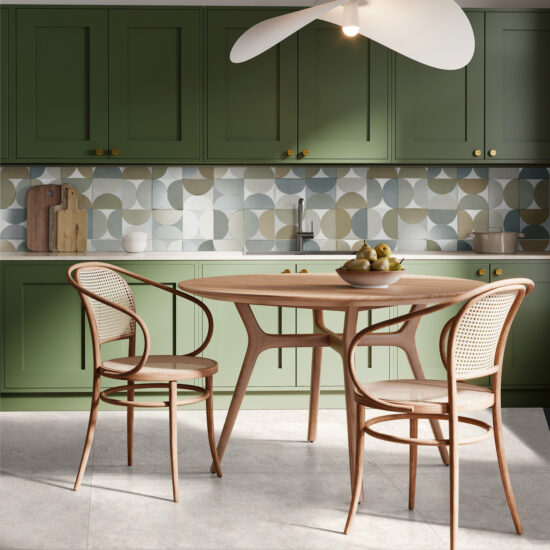
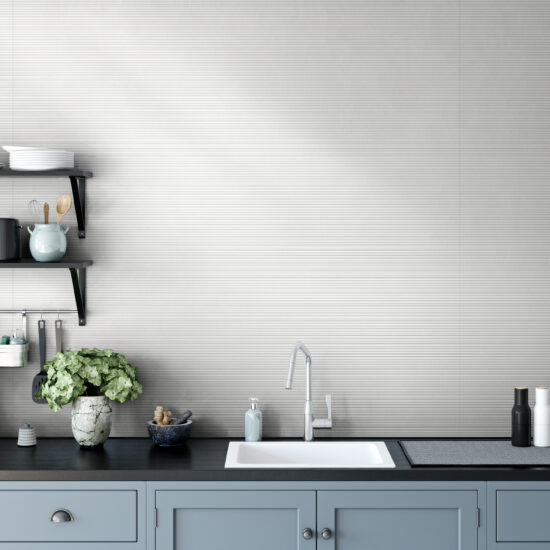

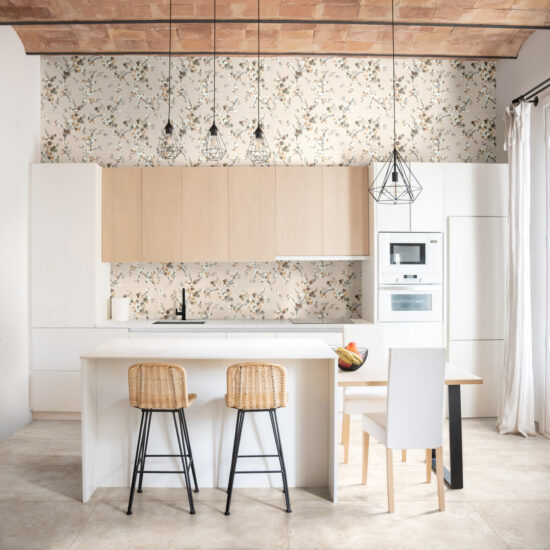
Preparing meals, washing dishes, moving chairs and small appliances: in the kitchen, surfaces are used constantly and must be able to withstand different types of stress, from frequent foot traffic to splashes of water and food.
Choosing ceramic and porcelain stoneware flooring and wall coverings meets these needs with materials that are durable, hygienic, and easy to maintain.
Porcelain stoneware stands out for its compact structure and low water absorption, features that help prevent liquids and substances that could cause stains from penetrating the surface. Its temperature resistance is also an advantage, especially for tiles installed near the cooking area, as long as installation and distance from heat sources follow the technical recommendations.
The versatility of the material also allows you to design coordinated surfaces, using porcelain for the floor and carrying the same aesthetic effect onto the walls or backsplash.
Read also: Ideas and solutions for kitchen coverings
Clean lines, essential shapes, and materials with a uniform look define many contemporary kitchens. In these designs, the flooring and wall coverings can become part of the architecture, complementing the cabinetry without adding too many visual breaks.
The large formats work especially well for this interpretation of the space. The generous dimensions reduce the number of grout lines, highlighting the veining and color variations of the surface.
Among the most interesting looks for a modern kitchen are concrete, stone, and marble, which can be paired with matte cabinet fronts, wood furniture, metal elements, or sleek countertops.
The Solida collection interprets concrete with shades reminiscent of terracotta. 3D Ink technology enhances the material details, while sizes up to 160x160 cm allow for seamless-looking flooring.
For a more elegant surface, you can opt for Incanto, a marble-look porcelain tile collection with large slabs up to 120x278 cm. The veining of different marbles becomes the star of wide walls and full-height coverings, while Glossy and Matte finishes let you choose between different interpretations of the material.
If you want a stone-inspired look, Realstone_Rapolano recreates the look of Tuscan travertine with surfaces enhanced by 3D Ink technology. Natural shades and the availability of large formats allow you to complement kitchen geometry with a subtle, textural design.
In a modern space, continuity can also be achieved by combining different but coordinated surfaces: for example, a concrete-look floor can be paired with a glossy wall covering, while a large marble-effect slab can enhance the wall behind the countertop.
The kitchen brings together surfaces with specific functions: the floor must withstand daily foot traffic, the walls can have a decorative role, and the backsplash protects the areas closest to the sink and cooktop.
Understanding these needs allows you to choose different tiles and finishes without losing design coherence, using color accents, coordinated textures, and complementary sizes.
The kitchen floor supports daily movements and interacts directly with the furnishings. That's why it's important to choose a surface that's durable, easy to clean, and able to maintain its appearance over time.
In contemporary homes, the kitchen is often part of an open space together with the living room. In these cases, using the same flooring connects the two functions and creates a visually unified living area.
Wood-look porcelain tile is an appealing option for those who want a warm, inviting space: the planks mimic the grain of natural woods and can be installed in various patterns, from regular layouts to more decorative arrangements.
The Nodis collection offers wood-look surfaces in Oak and Natural tones. The 20x120 cm format highlights the grain, while the 10x70 cm and Chevron 11x54 cm sizes allow for decorative layouts, adding movement to the flooring.
Another interpretation of wood comes from Ligno, inspired by Nordic landscapes and featuring subtle veining.
If you prefer a stone-look surface, Realstone_Travertino recreates the veining and layering of travertine in both Cross and Vein variants. Large formats, including 120x278 cm slabs, allow you to design coordinated floors and wall coverings, adapting the dimensions to the layout of the kitchen and living area.
Continuity between the two rooms doesn't require identical furnishings: the same flooring can complement a minimalist kitchen and a more articulated living room, creating a link between spaces with different functions.
Three-dimensional textures offer a way to personalize walls through relief, without necessarily relying on bold color contrasts.
The effect also depends on light: linear reliefs can follow the vertical development of the wall, while more complex geometries create shadows and variations that make the surface dynamic.
The Rapolano Wall collection echoes stone looks with white-body wall tiles in a 40x120 cm format. These surfaces coordinate with Realstone_Rapolano porcelain, maintaining visual continuity between floor and walls.
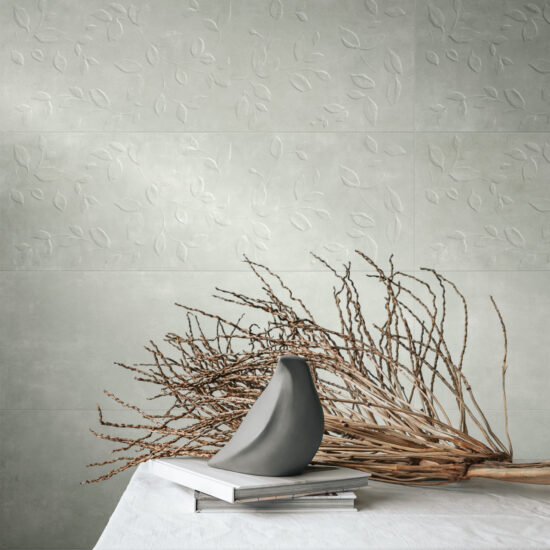
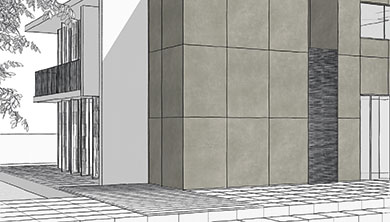
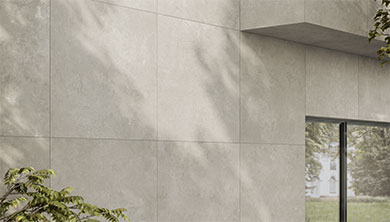
A different take is offered by Travertino Wall, which brings travertine's shading to walls with 40x120 cm white-body tiles.
Ceramic wall coverings can also be used on furniture elements, like the front of a peninsula or counter. In residential projects, this approach allows you to bring a material already used on the walls onto the kitchen furniture.
The same approach is also used in commercial and contract spaces, where covering counters and vertical surfaces helps define the space’s identity.
Read also: Stoneware coverings for counters: how to personalize kitchens, bars, and contract spaces
The backsplash is one of the most exposed surfaces during meal prep, since it's right by the sink and cooktop, where water, steam, grease, and food residues can accumulate.
One solution is to install a strip of tiles between the countertop and upper cabinets, choosing a small format to add color and movement. Alternatively, the covering can go all the way up the wall, especially in kitchens without upper cabinets or with open shelves.
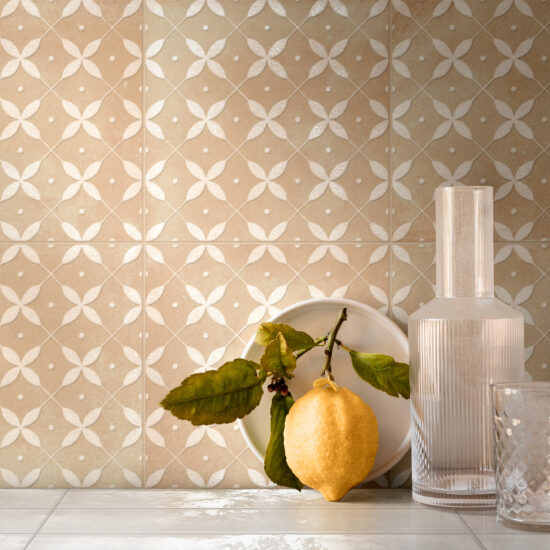
For a backsplash with a handcrafted look, Mid offers glossy porcelain tiles in a 6x24 cm format. The surface features glassy grit, color shading, and irregular edges, giving the covering depth.
The Gleeze collection also interprets the small format with glossy surfaces, characterized by reflections and tonal variations. Sizes 7.5x20, 5x15, and 10x10 cm let you try different layouts, while the 3D Egg and Eye structures create a three-dimensional pattern.
If you want to reduce the number of grout lines, large slabs are an alternative to small decorative formats. The Incanto collection, for example, lets you cover large wall sections with marble-effect surfaces, highlighting the veining and achieving a seamless result.
Ceramic mosaics can also be used to create a decorative strip, choosing tiles and patterns coordinated with the rest of the kitchen.
The color of the wall covering can complement the finishes of the cabinets or create intentional contrast with fronts, countertops, and metal details. A kitchen with neutral shades gives you more freedom when choosing furniture, while a colored wall can become the room’s standout feature.
White is a bright base, especially suitable for kitchens with clean lines. Beige and taupe bring in warmer shades, easily paired with wood and stone, while gray helps create modern, contemporary compositions.
The Tiempo collection offers a stone effect soft to the touch, available in White, Beige, Gray, Taupe, and Anthracite, and in finishes for outdoor spaces. For walls, you can choose matching coverings Tiempo Wall, in 20x60 and 30x90 cm sizes. The Flare and Saw 3D textures and the collection’s decorative pieces add movement to a neutral palette.
Light shades can also be enhanced with textured surfaces. Rapolano Wall brings stone looks in Ivory and Beige, perfect for covering kitchen walls with warm, natural tones. For a stone look suitable for both floors and walls, Realstone_Tirrenica offers a palette including White, Beige, Taupe, and Gray, letting you create coordinated combinations across different surfaces.
Beige can also be interpreted with different textures. The wood-look surfaces of Modus bring the warmth of natural grain, while Realstone_Travertino recalls the layers and shades of stone, offering an option for kitchens with a refined, understated look.
If you want to add a more noticeable color, try the small glossy formats from Look. The collection offers fourteen shades in 6x24 and 10x10 cm sizes, with porcelain tile surfaces featuring shiny glazes and subtle irregularities.
A more intense approach to color comes from Lucida, a 30x90 cm white-body wall tile. Ocean and Forest shades add deep tones, highlighted by the glossy finish and Touch technology.
For a softer look, Wish features 5.3x30 cm tiles with irregular edges and a semi-matte finish. Petal, Light Blue, and Green, along with other shades from the collection, allow you to introduce soft, nuanced colors inspired by the charm of handcrafted ceramics.
In kitchens inspired by tradition, the character of the room often comes from the combination of natural-looking materials, wood furnishings, and decorative details. Tiles can recall the surfaces of country homes, terracotta floors, and handcrafted ceramics, reinterpreted through the technical benefits of porcelain stoneware.
These are design possibilities, not set pairings: even a concrete-look floor or a colored wall covering can work in a rustic kitchen, depending on the chosen furnishings and finishes.
Stone-look porcelain is a solution for those who want to add veining, inclusions, and color variations, recalling the natural materials traditionally used for floors.
The Realstone_Classica collection interprets stone with White, Gray, and Ivory tones and surfaces enhanced by 3D Ink technology. The microtextures and graphic details let you create floors with a natural look that work with solid wood kitchens, lacquered furniture, or contemporary designs.
A more pronounced stone pattern defines Realstone_Ceppo, inspired by Ceppo di Gré. Mineral inclusions of different sizes add movement and help define its visual identity.
For a more direct reference to tradition, terracotta-look porcelain introduces the warm shades and irregularities of hand-worked surfaces.
The Amuri collection is inspired by artisan terracotta, with bold edges and subtle clouding. Cotto, Biscotto, Ivory, and Gray offer a Mediterranean feel, while the variety of formats expands design possibilities.
Ceramic surfaces can also echo the texture of traditional plaster. The Hand collection offers white-body wall tiles in a 33x100 cm format, with a matte finish inspired by troweled plaster.
So a rustic or classic kitchen can be interpreted using different materials and details, choosing whether to highlight the floor, backsplash, or a decorative wall, and building combinations based on the furnishing style.
To update the backsplash, you can work only on the area between the countertop and upper cabinets, choosing a new ceramic wall covering without necessarily changing the other elements in the kitchen.
Tiles and thin slabs can help minimize added thickness, which is important around outlets, switches, cabinets, and countertops.
Both finishes are suitable for kitchen walls, as long as you choose products appropriate for the specific application.
Glossy tiles enhance brightness and color with reflections, while matte tiles offer a more understated, textural look. Glossy surfaces require the normal care reserved for shiny finishes, but remain easy to clean with the right products.
To clean kitchen grout lines, it's best to use neutral or gentle degreasing cleaners compatible with the grout material, avoiding harsh products and rinsing thoroughly.
Read also: Porcelain stoneware: how to clean it best